

Psychosocial Mechanisms of Relational Hypocrisy and the Rebranding of Betrayal
The discrepancy between the moral imperatives individuals impose upon others and the permissive self-exemptions they grant themselves constitutes one of the most pervasive and destructive dynamics in human psychology. This phenomenon, colloquially understood as a “double standard,” functions through a complex interplay of cognitive dissonance, ego defense mechanisms, and social validation structures. In the context of romantic relationships, this asymmetry often manifests as a “militant standard” regarding a partner’s visual attention, while simultaneously excusing the accusing party’s own participation in secretive, emotionally charged social environments. Authenticity remains elusive because it necessitates a level of self-reflexive accountability—holding a mirror to one’s own behavior—that the human ego is fundamentally programmed to avoid.

The Cognitive Foundation: Dissonance and the Maintenance of the Moral Self-Image
At the core of relational hypocrisy lies the theory of cognitive dissonance, originally formulated by Leon Festinger in 1957. The theory posits that human beings possess an innate drive for cognitive consistency; when a person holds two contradictory beliefs, or when a belief is incongruent with a freely chosen action, they experience a state of psychological discomfort known as dissonance. To alleviate this tension, the individual must either change their behavior, modify their beliefs, or find a way to rationalize the inconsistency.
Hypocrisy is defined as a special case of cognitive dissonance, occurring when an individual freely chooses to promote or “preach” a specific behavior that they do not personally practice. The “hypocrisy-induction” procedure used in clinical research demonstrates that when people are made “mindful” of their past failures to adhere to a standard they publicly advocate, they experience heightened dissonance. In some prosocial contexts, this leads to behavior change, such as increased commitment to healthy practices. However, in interpersonal dynamics, the ego often chooses the path of least resistance: rather than changing the behavior, it deforms the standard or projects the failure onto the partner.
Theoretical Component |
Relational Manifestation |
Psychological Mechanism |
|---|---|---|
Cognitive Consistency |
The demand for absolute visual loyalty and transparency from a partner. |
The innate need for the partner's behavior to match the individual’s internal security requirements. |
Cognitive Dissonance |
The discomfort felt when one demands loyalty while secretly flirting in group chats. |
The tension between the "moral judge" persona and the "secretive transgressor" behavior. |
Moral Anxiety |
The guilt or fear arising from the knowledge of one's own double standards. |
The superego’s reaction to the ego’s violation of internal moral codes. |
Actor-Observer Bias |
Judging a partner’s distracted gaze as "perving" while viewing one’s own lustful chats as "harmless fun". |
Attributing one's own actions to external factors (situational) and others' to character (dispositional). |

The Neurobiology of Attention: Distinguishing "Squirrel Moments" from Intentional Disrespect
A primary site of relational conflict involves the concept of “looking” or visual attention. In high-conflict relationships, a partner may impose a standard of “visual loyalty” so rigid that even a fleeting, distracted glance across a room is interpreted as a betrayal and labeled as “perving”. This criminalization of the gaze often fails to differentiate between neurological distractibility and romantic intent, particularly for individuals navigating neurodivergence such as Attention Deficit Hyperactivity Disorder (ADHD).
ADHD and the Mechanics of Involuntary Gaze
The “squirrel moments” associated with ADHD are rooted in the neurological reality of task-unrelated thought (TUT), commonly known as mind-wandering. In individuals with ADHD, the attention control system—a conscious mechanism meant to reorient focus—is often bypassed by the distraction capacity system, which automatically reacts to task-irrelevant input. Research utilizing eye-gaze features, such as eye vergence and saccade velocity, indicates that much of this mind-wandering occurs with meta-awareness; the individual is aware their mind is drifting but lacks the immediate executive function to halt the drift.
Type of Mental State |
Visual Correlate |
Relational Interpretation |
|---|---|---|
Mind-Wandering (TUT) |
Wandering eyes, unsettled movements, lack of focus. |
Often misinterpreted as disinterest, boredom, or "searching for options". |
Fidgeting/Self-Regulation |
Tapping feet, squirming, looking away to gather thoughts. |
Can be seen as impatience or anxiety about the conversation. |
Task-Related Distraction |
Looking toward stimuli to process environmental information. | Criminalized as "looking" at potential mates or "perving". |
Hyperfocus |
Intense, unblinking focus on a non-partner stimulus. |
Framed by gaslighters as "willful neglect" or "caring more about that than me". |
When a partner criminalizes these involuntary “squirrel moments,” they are often applying a “militant standard” that leaves no room for human imperfection or neurobiological reality. This over-policing creates a environment of “moral hypervigilance,” where the neurodivergent partner must constantly mask their natural cognitive functions to avoid being “put on trial”.
The Weaponization of Memory and Symptomatology
In dysfunctional dynamics, the policing partner may go beyond mere misinterpretation and engage in the active weaponization of ADHD symptoms to maintain power. This is frequently observed in the exploitation of forgetfulness and working memory lapses. A partner might use “memory-based gaslighting,” asserting that a conversation happened which never did, or denying that they gave permission for a certain behavior, knowing the ADHD individual may lack the “forensic” mental records to dispute the claim.
This manipulation imposes a heavy emotional burden, leading the neurodivergent partner to experience deep self-doubt, shame, and a sense of being “inherently wrong” or “different species from everyone who’s lovable”. By framing a neurological trait as a moral failure, the accuser effectively silences any potential criticism of their own behavior.

The Digital Gray Zone: Micro-Cheating and the Rebranding of Betrayal
While one partner is scrutinized for the direction of their eyes in physical space, the other may be actively engaging in what is defined as “micro-cheating.” Micro-cheating refers to small, often ambiguous behaviors that suggest emotional or relational energy is being directed outside the partnership. These actions thrive in the “gray area” of modern connectivity, where secrecy and digital distance allow for a rebranding of betrayal as “harmless fun” or “just a joke”.
The Anatomy of Micro-Cheating Behaviors
The distinction between “harmless fun” and micro-cheating is determined not by the actor’s stated intent, but by the impact on the partner and the presence of secrecy. When an individual feels the need to hide a message, delete an interaction, or rename a contact, they have already crossed a boundary of trust
Micro-Cheating Behavior |
Psychological Rebranding |
Relationship Impact |
|---|---|---|
"Liking" Thirst Traps | "Just supportive of a friend," "Harmless scrolling". |
Introduction of doubt and insecurity; signals a shift in emotional loyalty. |
Secret Group Chats |
"Locker room talk," "Just girl/guy talk," "An echo chamber". |
Creates emotional distance; builds an "emotional bridge" outside the relationship. |
Maintaining Dating Profiles |
"Curiosity," "Just for validation/fun". |
Signals a lack of commitment; keeps "a foot out the door". |
Comparing Partners |
"Sarah gets my humor better," "Sarah would never act like this". |
Erodes self-esteem; makes the primary partner feel inadequate and "policed". |
The phenomenon of the “echo chamber” group chat is particularly salient. These social environments provide a legitimized space for the individual to receive “supply” or validation from peers while engaging in behaviors that would be condemned in their primary relationship. Within these groups, the individual and their friends create a shared illusion of innocence, often demeaning the “militant” partner as “crazy” or “controlling” to avoid collective accountability.
Secrecy as the Core Betrayal
In many instances, the specific action—such as liking a photo or sending a meme—is less damaging than the choice to hide it. Secrecy is the mechanism that transforms a social interaction into a micro-betrayal. When a partner is “blinded” by their partner’s digital secrecy while being “punished” for their own involuntary eye movements, they are trapped in a profound moral asymmetry. This imbalance is the “Illusion of Innocence”: the actor believes their hidden actions do not count because they remain hidden, while the partner’s visible lapses are treated as capital crimes.

Ego Defenses: Projection, Deflection, and the Avoidance of the Mirror
The maintenance of this massive gap between demand and execution requires robust psychological defenses. These mechanisms operate at an unconscious level to protect the ego from the “overwhelming emotions” associated with the recognition of one’s own hypocrisy.
The Mechanism of Projection
Projection is perhaps the most critical defense in the repertoire of the hypocritical partner. It involves the unconscious process of accusing another person of the very impulses or behaviors that one is secretly harboring or performing oneself. By over-policing a partner’s “wandering eyes,” the individual offloads their own subconscious guilt regarding their own digital wandering.
This creates a “good offense is the best defense” strategy. If the partner is constantly under investigation for a distracted look, the policing partner remains the “moral judge” and avoids being placed on trial themselves. Projection is not just a way to avoid blame; it is a way to punish someone else as a proxy for the punishment one feels they deserve.
Deflection and Blame-Shifting
When the “militant” standard is finally questioned or the hypocrisy is confronted, the ego pivots to deflection. Deflection is the semi-conscious redirection of accountability away from the self and toward the partner. This often takes the form of:
- Denial: Refusing to acknowledge the facts of the micro-cheating or the double standard.
- Blame-Shifting: Claiming the behavior only happened because the partner was “too sensitive,” “too controlling,” or “uninterested”.
- Rewriting History: Claiming that certain boundaries were never agreed upon or that the partner is “remembering it wrong”.
Defensive Tactic |
Operational Definition |
Relational Consequence |
|---|---|---|
DARVO |
Deny the behavior, Attack the accuser, Reverse the roles of Victim and Offender. |
The hurt partner ends up apologizing for their reaction to the betrayal. |
Stonewalling |
Refusing to engage in the conversation until the partner "drops it". |
Creates an emotional vacuum; enforces the double standard through silence. |
Compensation |
Turning to external validation (alcohol, social media) to drown out relational guilt. |
Deepens the emotional distance and increases the reliance on the "echo chamber". |
Minimization | Labeling micro-betrayals as "just a joke" or "harmless fun". |
Invalidates the partner’s reality and erodes the foundation of shared trust. |
These defenses indicate a “fragile self-worth” rather than an inflated ego. For the deflector, acknowledging a mistake is felt as a threat to their entire sense of self-competence, necessitating the maintenance of the “Illusive Mirror” where they are always the victim or the righteous judge.
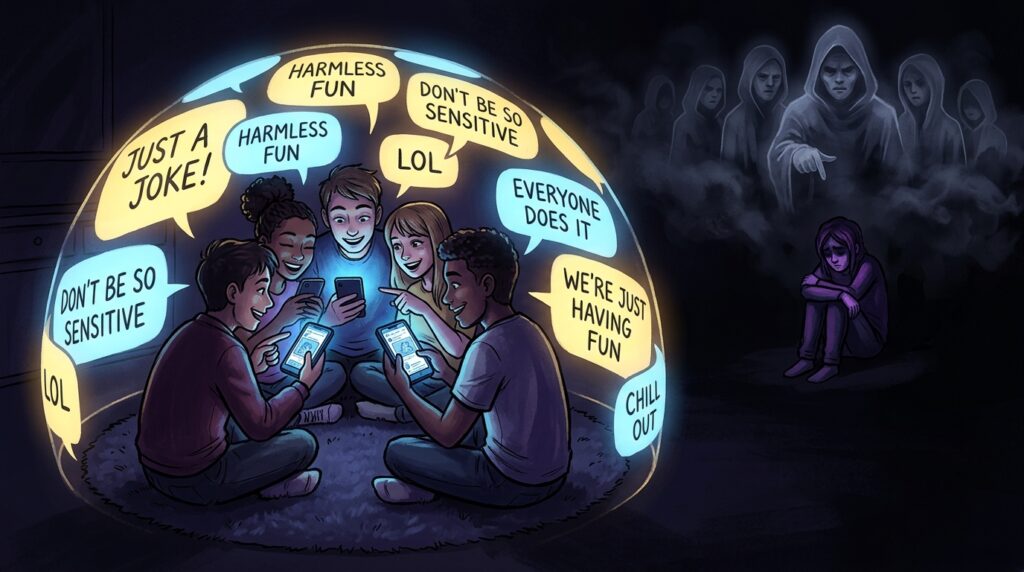
The Social Catalyst: Echo Chambers and the "Boys' Club" Mentality
Hypocrisy is rarely a solitary endeavor; it is frequently nurtured and validated by social groups. The “massive gap” between a person’s public morality and private behavior is often bridged by an echo chamber of peers who provide a “safe” environment for the expression of double standards.
Homosociality and Narcissistic Masculinity
Homosociality and Narcissistic MasculinityResearch into “homosociality”—non-sexual bonding within same-sex groups—reveals that these environments can sometimes pedestalize male relationships over female ones, creating a closed system of validation. Within these groups, “locker room talk” and “womanizing” are often rebranded as essential masculine traits. This group dynamic creates a “shared illusion” where the individual’s actions are normalized by the behavior of the group.
The influence of these groups is profound:
- Normalization: If “all the guys do it,” the individual rationalizes that their behavior is “normal” and that their partner is the one with “impossible standards”.
- Co-signing: Friends actively validate the individual’s choice to hide messages or revel in outside attention, reinforcing the secrecy that characterizes micro-cheating.
- Misanthropic Roots: In extreme narcissistic dynamics, these groups act as a “legitimized environment” to attain supply while maintaining a “parasitic” relationship with a partner for the appearance of normalcy.
The Distrust-Hypocrisy Vicious Cycle
The presence of distrust in a relationship—often stemming from these social echo chambers or past betrayals—actually fuels further hypocrisy. Research by Alexa Weiss and colleagues shows that when individuals feel distrust, they become more likely to endorse lenient moral standards for themselves as a form of “exploitation avoidance”. They become hyper-aware of the possibility that their partner might “sucker” them, leading them to “nip exploitative attempts in the bud” by applying harsh standards to the partner while giving themselves “room to breathe”.
This creates a vicious cycle: distrust leads to double standards, which leads to more secrecy, which ultimately results in the corrosion of the interpersonal relationship. The individual becomes a “two-faced” moral agent, preaching water while drinking wine, all while feeling righteous in their protection of their own self-interest.

Moral Superiority and the Public-Private Paradox
The human ego is highly adept at maintaining a “Moral Superiority Effect,” where individuals believe they are more ethical than the average person. This belief is a key driver of moral hypocrisy, as it motivates a “public moral performance” that is not matched by “private moral integrity”.
Public Appearances vs. Private Realities
Domain |
Public Moral Performance |
Private Moral Integrity |
|---|---|---|
Motivation | Interpersonal impression management and self-enhancement. | Pursuit of self-interest and avoidance of personal cost. |
Relational Example | Condemning a partner’s "perving" in front of friends. | Engaging in secret "thirst trap" engagement on Instagram. |
Mechanism | Choice of seemingly fair procedures/standards. | Discrepant behavior when reputation is not at risk. |
Outcome | Internalization of a "virtuous" identity. | Erosion of trust and accumulation of relational "debt". |
This “public-private” split is what allows a partner to feel completely justified in their “militant” demands. In their own mind, they are the more moral partner because they identify with their public, “virtuous” performance, while they conveniently “repress” or “minimize” their private transgressions.

Asymmetric Boundaries and the Erosion of Authenticity
The Trap of Asymmetric Policing
In the “looking” dynamic described, the policing partner is often projecting their own lack of boundaries onto the other. They use the partner’s “wandering eyes” as a tool for “dominance, or humiliation to control conversations”. This is an unhealthy emotional boundary, designed to protect the police-er’s ego from the “anxiety” of their own potential inadequacy.
Truly healthy boundaries are “assertive” and “kind,” focusing on shared needs rather than “spite” or “punishment”. When one partner uses a boundary as a “militant standard” to catch the other out, it is no longer a tool for relationship health—it is a tool for “gaslighting” and “control”
Identifying Weaponized Incompetence in Accountability
When the hypocritical partner is confronted with their double standard, they may also resort to “weaponized incompetence”—the strategic feigning of inability to understand why their behavior is hurtful. They might claim they “didn’t realize” that a group chat was inappropriate, or that they “don’t know how to set boundaries” with friends, forcing the other partner to “manage” their behavior for them.
Diagnostic Marker |
Genuine Incompetence |
Weaponized Incompetence |
|---|---|---|
Capability |
Consistent failure regardless of who is watching. |
Capability exists at work or with friends, but not with the partner. |
Pattern |
Broad difficulty with boundaries or memory. |
Selective "forgetfulness" only when it benefits their narrative. |
Feedback Response |
Gradual improvement with practice and effort. |
Deflection, argument, or repeating the same "error" indefinitely. |
Affect |
Shame and visible frustration with own limits. |
Defensiveness or relief when the partner takes over the burden. |
This dynamic exploits the “conscientiousness” of the hurt partner. The partner who cares about the relationship ends up doing the emotional labor of “teaching” the other partner how to be loyal—a trap that ensures the double standard remains unaddressed.

Toward a Symmetric Connection: Dissolving the Illusion
Authenticity requires the “resolving of cognitive dissonance” through actual behavior change rather than defensive maneuvering. It requires the recognition that “visual loyalty” cannot be demanded if “digital loyalty” is not practiced. The massive gap between what people demand and what they excuse is not a personality trait; it is a “defense system” drawn from a “personal defense system” formed in childhood to protect a vulnerable self.
The Role of Reflection and Radical Transparency
To move beyond hypocrisy, partners must transition from a “courtroom” mentality to one of “reflective listening”. This involves Restating what the partner has said to ensure they are heard, followed by a validating statement—even if the truth is uncomfortable.
For the partner with ADHD, this means being open about “squirrel moments” without shame, while setting firm boundaries against the weaponization of their neurodivergence. For the partner in the “echo chamber,” it means recognizing that “harmless fun” is an illusion used to hide emotional distance.
Final Insights on Moral Integrity
Works Cited
- Embrace hypocrisy: Leveraging cognitive dissonance as a mechanism for change – State Bar of Michigan, accessed on April 17, 2026, https://www.michbar.org/journal/Details/Embrace-hypocrisy-Leveraging-cognitive-dissonance-as-a-mechanism-for-change?ArticleID=4860
- Setting Boundaries | Counseling and Psychological Services – The University of Kansas, accessed on April 17, 2026, https://caps.ku.edu/setting-boundaries
- The Guide to Strong Relationship Boundaries – Mark Manson, accessed on April 17, 2026, https://markmanson.net/boundaries
- Teaching Tip Sheet: Cognitive Dissonance, accessed on April 17, 2026, https://www.apa.org/pi/aids/resources/education/dissonance
- Cognitive Dissonance In Relationships: Contradictory Behaviors, accessed on April 17, 2026, https://www.regain.us/advice/general/cognitive-dissonance-in-relationships-how-contradictory-beliefs-and-behaviors-affect-couples/
- Ego defense mechanisms | Psychology | Research Starters – EBSCO, accessed on April 17, 2026, https://www.ebsco.com/research-starters/psychology/ego-defense-mechanisms
- Defense Mechanisms | Psychology Today, accessed on April 17, 2026, https://www.psychologytoday.com/us/basics/defense-mechanisms
- Defense Mechanisms: Psychological Techniques We Use to Cope With Anxieties, accessed on April 17, 2026, https://www.psychologistworld.com/freud/defense-mechanisms
- I Can But You Can’t: Inconsistencies in Judgments of and …, accessed on April 17, 2026, https://www.cambridge.org/core/journals/journal-of-relationships-research/article/i-can-but-you-cant-inconsistencies-in-judgments-of-and-experiences-with-infidelity/2474BD2796E37C2EE6D133D586CAF373
- moral inconsistency – Beth Anne Helgason, accessed on April 17, 2026, https://tetra-oriole-fdt9.squarespace.com/s/Effron-Helgason-2022-AESP-Moral-Inconsistency.pdf
- (PDF) Self-enhancement in moral hypocrisy: Moral superiority and …, accessed on April 17, 2026, https://www.researchgate.net/publication/334264607_Self-enhancement_in_moral_hypocrisy_Moral_superiority_and_moral_identity_are_about_better_appearances
- The crazy making double standards and cognitive dissonance it causes : r/BPDlovedones, accessed on April 17, 2026, https://www.reddit.com/r/BPDlovedones/comments/1nmso0o/the_crazy_making_double_standards_and_cognitive/
- If You Trust Them, Do You Still Need Boundaries? – Roots Relational Therapy, accessed on April 17, 2026, https://www.rootsrelationaltherapy.com/blogs-for-better-relationships/trust-boundaries
- Task-unrelated thought during educational activities: A meta-analysis of its occurrence and relationship with learning | Request PDF – ResearchGate, accessed on April 17, 2026, https://www.researchgate.net/publication/362662785_Task-unrelated_thought_during_educational_activities_A_meta-analysis_of_its_occurrence_and_relationship_with_learning
- 8 Things You’re Saying Without Even Realizing It – Wondermind, accessed on April 17, 2026, https://www.wondermind.com/article/nonverbal-communication/
- A QUALITATIVE ANALYSIS OF THE EFFECTS OF MINDFULNESS PRACTICE ON SELF- REGULATION IN A FINNISH CLASSROOM – Trepo, accessed on April 17, 2026, https://trepo.tuni.fi/bitstream/handle/10024/131285/Ojell_Palohuhta.pdf?sequence=3&isAllowed=y
- Date wants to know if he did something wrong. Should I tell him the truth? – Reddit, accessed on April 17, 2026, https://www.reddit.com/r/datingoverthirty/comments/plto9i/date_wants_to_know_if_he_did_something_wrong/
- 9 Ways ADHD Traits Can Increase Susceptibility to Gaslighting – Marriage.com, accessed on April 17, 2026, https://www.marriage.com/advice/love/adhd-traits-gaslighting/
- Raise Confident, Compassionate Kids by Becoming the Parent You Wish You’d Had – dokumen.pub, accessed on April 17, 2026, https://dokumen.pub/download/parent-yourself-first-raise-confident-compassionate-kids-by-becoming-the-parent-you-wish-youd-had-9780593716519-9780593716526.html
- Jamie Louise Hollis – ADHD SLT Neurodivergence and Abuse, accessed on April 17, 2026, https://adhdslt.co.uk/neurodivergence-and-abuse/
- ADHD gaslighting and chasing new relationship energy (Reddit Reactions) – Understood.org, accessed on April 17, 2026, https://www.understood.org/en/podcasts/sorry-i-missed-this/adhd-gaslighting-chasing-new-relationship-energy
- What Is Micro-Cheating? Why It Feels Harmless But Isn’t – Marriage365, accessed on April 17, 2026, https://marriage365.com/blog/micro-cheating-emotional-affairs/
- Micro-Cheating | Psychology Today, accessed on April 17, 2026, https://www.psychologytoday.com/us/basics/micro-cheating
- Small acts of cheating: The rise of “micro-cheating” and its impact on trust in relationship. What really constitute cheating and understand the nuances between all that is involved and at what level does micro-cheating actually happens – Dan Amzallag, accessed on April 17, 2026, https://lifecoachdanamzallag.com/small-acts-of-cheating-the-rise-of-micro-cheating-and-its-impact-on-trust-in-relationship-what-really-constitute-cheating-and-understand-the-nuances-between-all-that-is-involved-and-at-what-leve/
- Micro-Cheating Ultimate Guide: What It Is, Why It Matters, and How to Deal – Couples Learn, accessed on April 17, 2026, https://coupleslearn.com/micro-cheating/
- My Partner Likes Other Girls’ Photos: Red Flag or Harmless? – Lemon8, accessed on April 17, 2026, https://www.lemon8-app.com/@ciacaj/7546238186402447885?region=us
- Micro-Cheating Behaviors In Relationships – The Wellness Corner, accessed on April 17, 2026, https://www.thewellnesscorner.com/blog/micro-cheating-behaviors-in-relationships
- Psychology and Psychiatry: Open access – Impact of Micro Cheating On Relationship Related Mental Health Disorders – OMICS International, accessed on April 17, 2026, https://www.omicsonline.org/open-access/impact-of-micro-cheating-on-relationship-related-mental-health-disorders-134714.html
- When Narcissism Meets the Boys’ Club – The Homosocial Nature of Narcissistic Masculinity, accessed on April 17, 2026, https://glynissherwood.com/when-narcissism-meets-the-boys-club-the-homosocial-nature-of-narcissistic-masculinity/
- Is It Cheating or Just Innocent Fun? | Psychology Today, accessed on April 17, 2026, https://www.psychologytoday.com/us/blog/family-and-trauma/202502/is-it-cheating-or-just-innocent-fun
- 9 signs someone is micro-cheating and gaslighting you into thinking …, accessed on April 17, 2026, https://experteditor.com.au/blog/m-9-signs-someone-is-micro-cheating-and-gaslighting-you-into-thinking-youre-overreacting/
- I [21F] found some messages on my bf [28M] phone recently. I need advice on wether this is “locker room” talk or something worse – Reddit, accessed on April 17, 2026, https://www.reddit.com/r/relationship_advice/comments/1r3dtgu/i_21f_found_some_messages_on_my_bf_28m_phone/
- Understanding Deflection: A Psychological Defense Mechanism – ReachLink, accessed on April 17, 2026, https://reachlink.com/advice/defense-mechanisms/understanding-deflection-a-psychological-defense-mechanism/
- Avoiding Double Standards In Relationships – BetterHelp, accessed on April 17, 2026, https://www.betterhelp.com/advice/relations/how-to-avoid-double-standards-in-relationships/
- Setting Healthy Boundaries in Relationships – HelpGuide.org, accessed on April 17, 2026, https://www.helpguide.org/relationships/social-connection/setting-healthy-boundaries-in-relationships
- SOCIAL MEDIA, SENTIMENT AND PUBLIC OPINIONS: EVIDENCE FROM #BREXIT AND #USELECTION – University of California, Berkeley, accessed on April 17, 2026, https://eml.berkeley.edu/~ygorodni/Brexit_Election.pdf
- (PDF) Two-Faced Morality: Distrust Promotes Divergent Moral …, accessed on April 17, 2026, https://www.researchgate.net/publication/325404027_Two-Faced_Morality_Distrust_Promotes_Divergent_Moral_Standards_for_the_Self_Versus_Others
- How is Life Tree(ting) You?: Trust, Safety, and Respect – The Importance of Boundaries, accessed on April 17, 2026, https://studentaffairs.stanford.edu/how-life-treeting-you-importance-of-boundaries
- Weaponized Incompetence in Relationships: Signs and Impact – ReachLink, accessed on April 17, 2026, https://reachlink.com/advice/relations/weaponized-incompetence-in-relationsips/


